
During the American Civil War (1861-1865), soldiers on both sides wore a variety of caps, also known as kepis or forage caps, as part of their uniforms. These caps served both functional and stylistic purposes and were often emblematic of the soldier’s branch, regiment, or state. Here’s an overview of Civil War caps:
Union (Northern States) Caps:
Kepi:
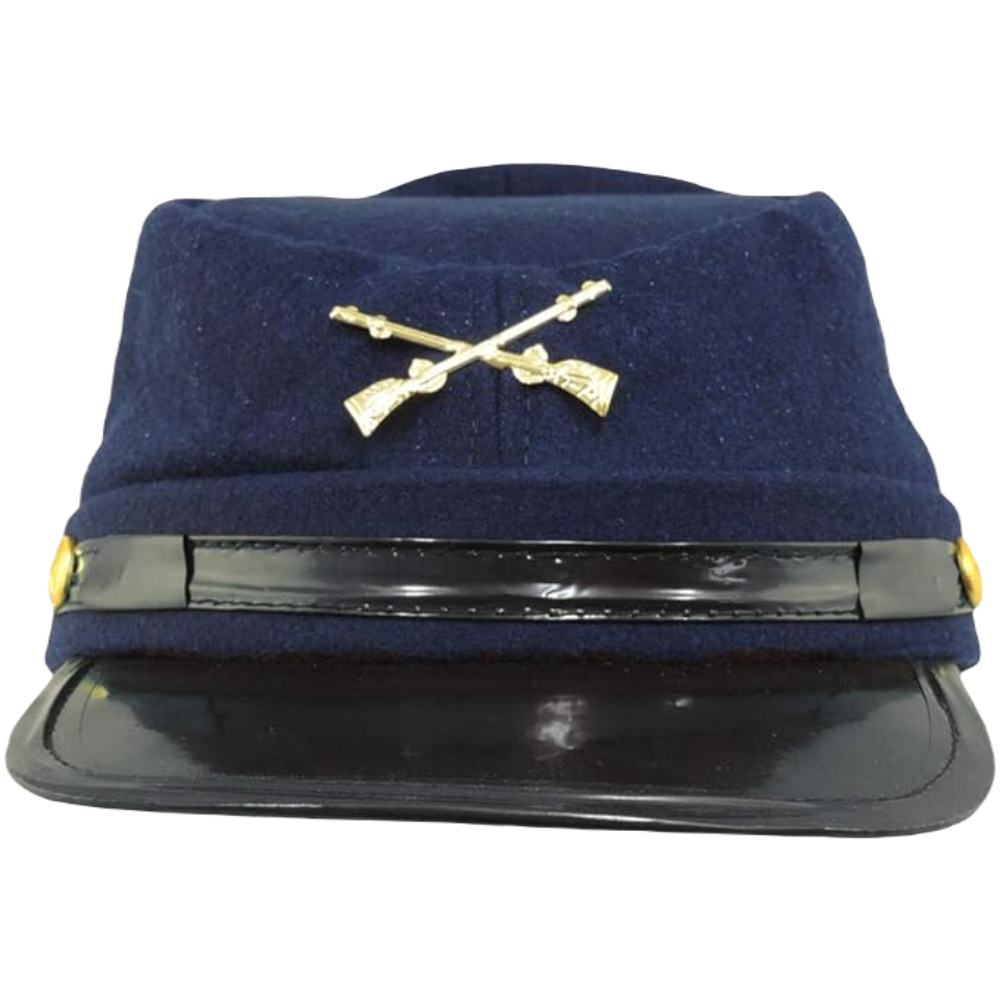
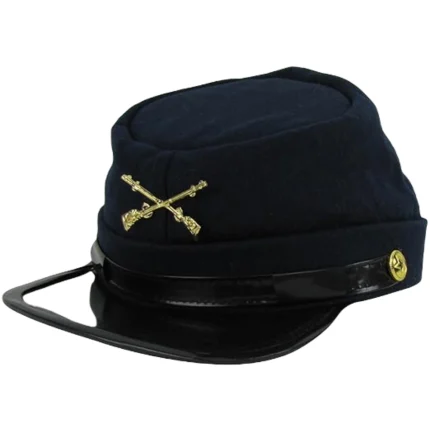
The kepi was the most common cap worn by Union soldiers.
It was characterized by its flat top, a short, round brim, and a chinstrap that fastened under the chin.
The kepi was usually made of wool and came in various colors, but the standard color was dark blue for Union infantry.
Officers often wore kepis with additional embellishments like gold braid, braided cords, and colored piping to denote rank.
Forage Cap:
The forage cap, also known as a “bummer cap” or “Jeff Davis hat,” was another type of cap worn by Union soldiers.
It had a similar shape to the kepi but with a slightly larger, more sloping brim.
Forage caps were typically made of wool and were often in dark blue for infantry, with colored piping to denote branch or regiment.
Other Caps:
Union soldiers also wore other types of caps, including fatigue caps and dress caps, depending on the occasion and the soldier’s role within the military.
Confederacy (Southern States) Caps:
Kepi:
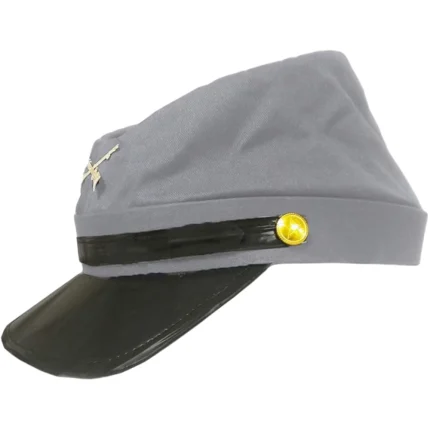
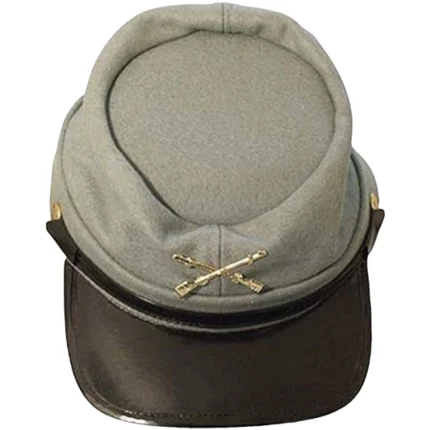
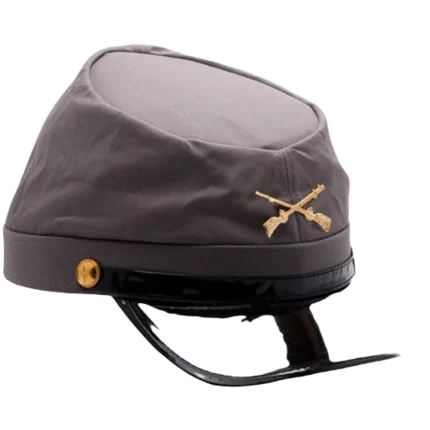
Confederate soldiers also wore kepis, similar in style to those worn by Union soldiers.
Confederate kepis were typically gray or butternut in color, though variations existed depending on the availability of materials and the preferences of individual units.
Like their Union counterparts, Confederate officers often had more ornate kepis with additional adornments to denote rank.
Forage Cap:
Confederate soldiers wore forage caps similar to those worn by Union soldiers, though the style and color varied.
Confederate forage caps were typically gray or butternut, reflecting the shortage of materials and the need for improvisation in the Confederate army.
Common Elements:
Embellishments:
Both Union and Confederate caps often featured regimental or state insignia, including brass badges, buttons, and embroidered patches, to identify the soldier’s unit or affiliation.
Practicality:
Caps during the Civil War served a practical purpose, providing some protection from the elements while still allowing for ease of movement and ventilation.
Cultural Significance:
Caps were often cherished by soldiers as symbols of their service and camaraderie, and many veterans continued to wear their caps long after the war ended as a badge of honor.


Reviews
There are no reviews yet.